Invisible Disability
A disability that doesn’t fit on a postcard — and an open invitation to be allies to each other.
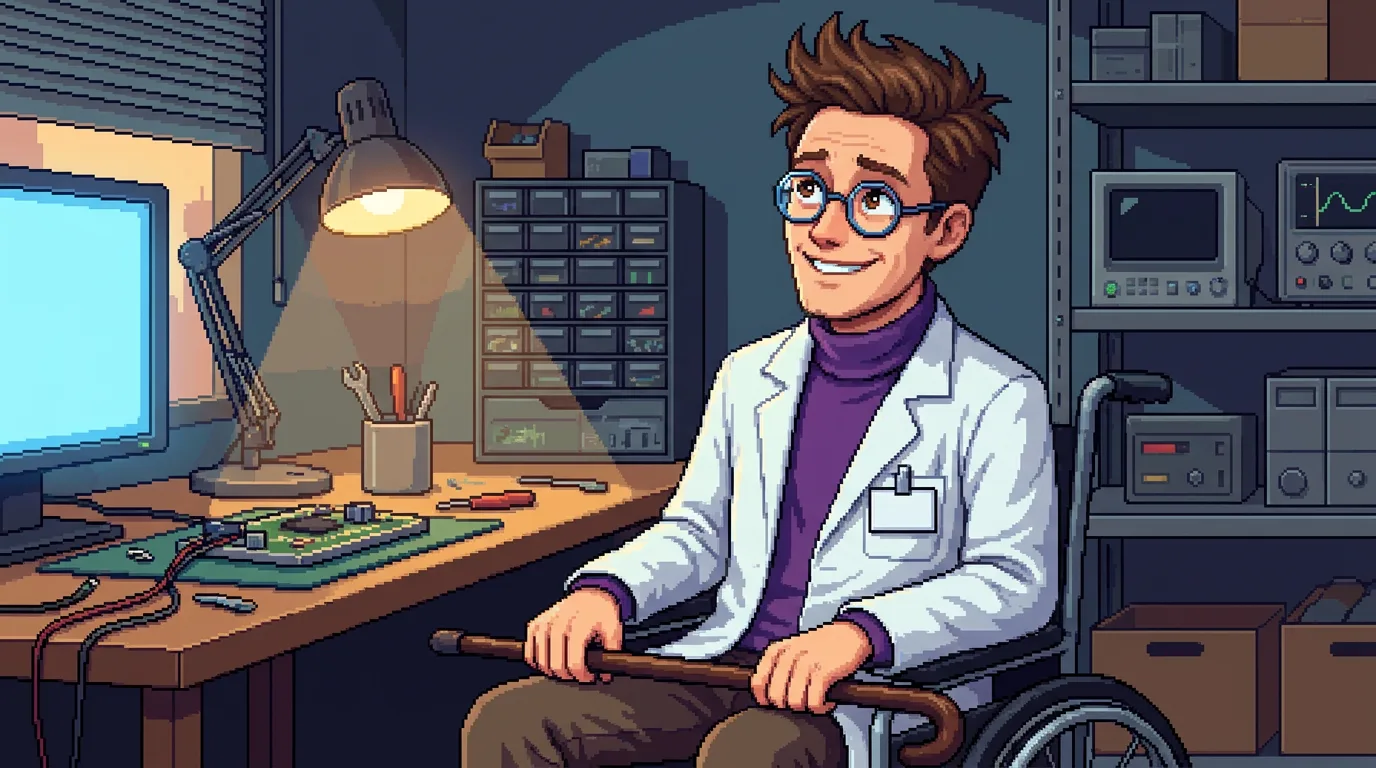
Some disabilities arrive with a picture attached. A cast. A white cane. A word a stranger already knows how to file you under. Mine doesn’t come with one of those. I have an auto-immune condition that affects my neurology, and it changes — week to week, and some days hour to hour — depending on how much my body has been asked to carry. Too much activity, or the wrong kind of hard experience, and it gets worse for a while. That isn’t a mood or a metaphor. It’s a medical fact about how this particular condition works.
For me, and for a lot of people, that adds up to a disability that doesn’t fit on a postcard. There’s no single image that tells you what’s true, because what’s true keeps moving. Some weeks I need a wheelchair if I’m going anywhere past the coffee shop, because pushing further would cost me health I can’t easily earn back. Then there are good stretches — the condition eases, I’ve been careful with my energy — where I could have left the cane at home. Which aid is out on a given day says nothing about how brave I’m feeling. It’s logistics, the same as choosing a jacket for the weather. I say that plainly because I’d like it to be ordinary. It is.
I’ve written elsewhere about why this invisibility is really a systems problem — why the answers for people like me tend to be scattered where no one can connect them, and why that’s a thing you can actually build your way out of. This page isn’t that argument. This one is smaller and closer to home.
I’m not writing it to be seen as sick. I’m writing it because figuring out your own health is hard enough without also having to prove, again and again, to a new doctor and a new form and a new person deciding whether to believe you, that the thing they can’t see is real. That translation is the part that wears people down — more than the symptoms, some days. And it gets lighter for all of us when we start from a simple place: when someone tells you about a thing you can’t see, believe them first, and ask your questions second.
That’s most of the ask, and it’s smaller than it sounds. Keep an open mind. Assume the person in front of you knows their own body better than you do. Be an ally to the next person whose diagnosis is still a question mark — the still-undiagnosed, the newly-diagnosed, the ones with a rare disease nobody in the room has heard of. A lot of us are carrying question marks. A lot of us are only a few unlucky months from carrying one. The biology that keeps you well and the biology I’m working to protect are the same biology — it’s precious, it’s shared, and none of us get to take it for granted forever.
I do this work as a scientist and I live it as a patient, and I’ve stopped pretending those are two different jobs. My longer story — the years of being misdiagnosed, the odyssey of it — is on another page, if you want it. The reason I put my own condition here is the same reason I put my face and my chair and my half-answered questions on the internet on purpose: the people closest to a problem should get to help solve it, and being open about mine is how I invite you to be open about yours.
If you can’t see something, that isn’t the same as it not being there. Most of what matters is invisible until somebody decides to take it seriously. Let’s decide to.
A note on how this was made: like everything on this site, this piece was drafted through my own agentic context graph — a system I build and use in the open. The story and the words are mine; the scaffolding that helped shape them is part of the point.