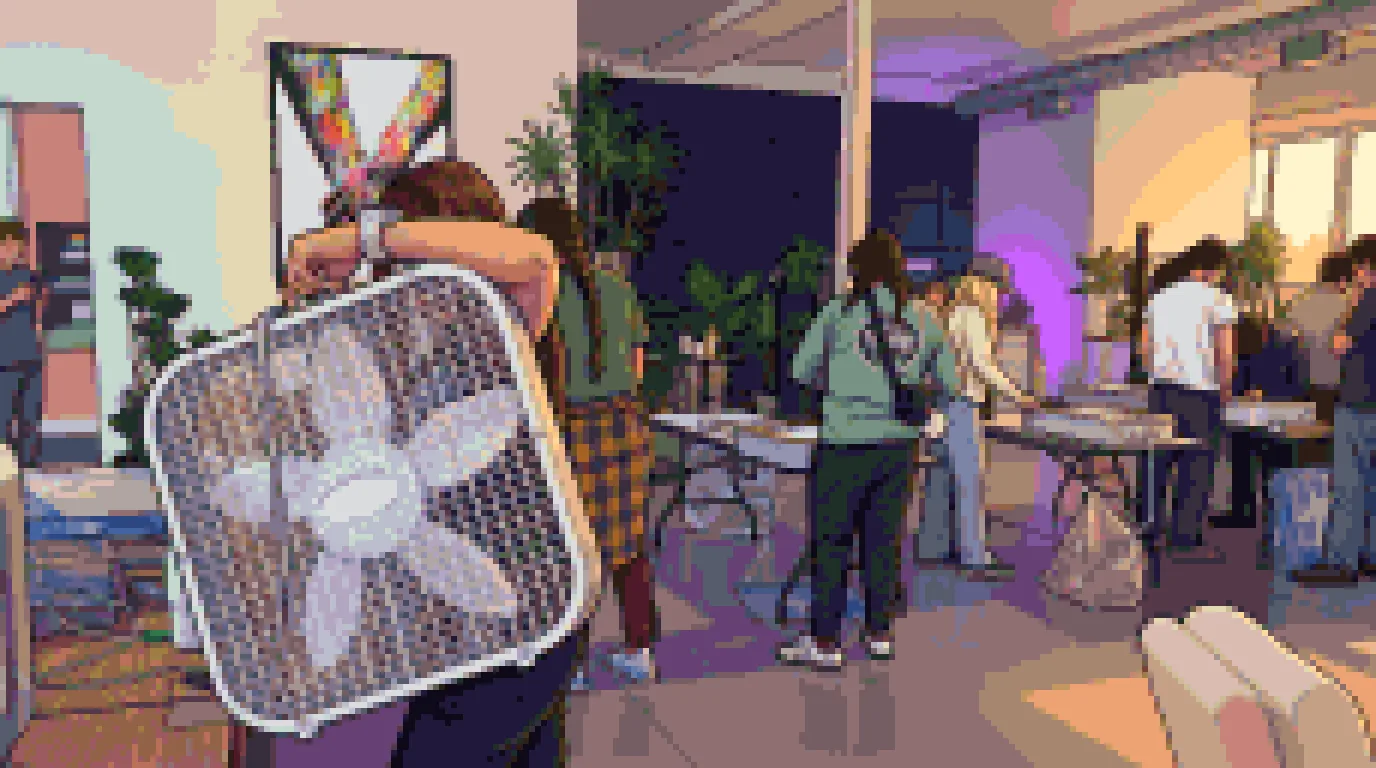
Clean Air Classroom
Community-built Corsi-Rosenthal air filters for schools and public spaces — maker culture meets environmental justice in the wake of the LA fires.
When the LA fires hit, the air quality data told one story and our lungs told another. Schools needed clean air. Families needed clean air. Community centers needed clean air. The commercial purifiers were either too expensive or too slow to arrive — and clean air is not something you can ask a child to wait for. So we built our own.
Clean Air Classroom puts Corsi-Rosenthal boxes into schools and community spaces through hands-on build events. The design is deliberately humble — a box fan, a few HVAC furnace filters, and some tape, arranged so the physics does the rest — and it moves clean air at a fraction of the cost of a commercial purifier. The format is just as low-barrier: show up, learn how air filtration actually works, build a unit, and carry it home to your classroom or living room. No purchase order, no waiting list, no expertise required at the door.
Every build is also a science lesson. Particulate matter, fluid dynamics, filter media, air changes per hour — the kids who assemble the filters leave understanding why they work, not just that they do. Give someone the reason and you’ve given them something they can rebuild without you, and explain to the next person after that.
The urgency behind all this isn’t abstract. Wildfire smoke isn’t just ordinary air pollution scaled up — the research points to it being harder on the lungs than the same concentration of everyday particulate matter, and long-term exposure to polluted air carries risks that reach well beyond the lungs. Clean indoor air during a smoke event isn’t a comfort; it’s a health intervention. The science of why — the studies, the air-quality data, the filter math — lives on the project site, and it’s exactly what a build event teaches while your hands are busy taping a fan to a filter.
The project runs through Smarter with Science programming at the KINN community center and feeds into the Science Sunday curriculum. It lives where environmental justice meets maker culture meets community organizing: the neighborhoods breathing the worst air are the ones building the fix, with their own hands, from parts anyone can buy. A unit built in one classroom becomes the pattern for the next one down the block — the plans stay open, so nobody has to start from scratch or wait for permission to breathe easier. The tools are cheap. The knowledge is free. The air belongs to everyone — so come build some clean air with us.