The Undiagnosed Hackathon
International hackathon founded by the Wilhelm Foundation, where AI specialists, clinicians, and families work in 48-hour sprints to solve undiagnosed rare disease cases.
Some rare diseases are so rare that the person carrying one may be the only documented case on Earth. There’s no specialist to refer them to, because the expertise doesn’t exist yet — it has to be built, case by case, family by family. Even now, with genome sequencing widely available, testing yields an answer for only about 25–35% of the people who reach it — most people on a diagnostic odyssey still end up without one.
The Undiagnosed Hackathon was founded by the Wilhelm Foundation to close that gap. Helene and Mikk Cederroth started the foundation from Brottby, Sweden, after losing three of their four children to undiagnosed degenerative disease — a loss they turned into a mission with a plain and stubborn goal: that every person with an undiagnosed disease should have the chance to get a name for it.
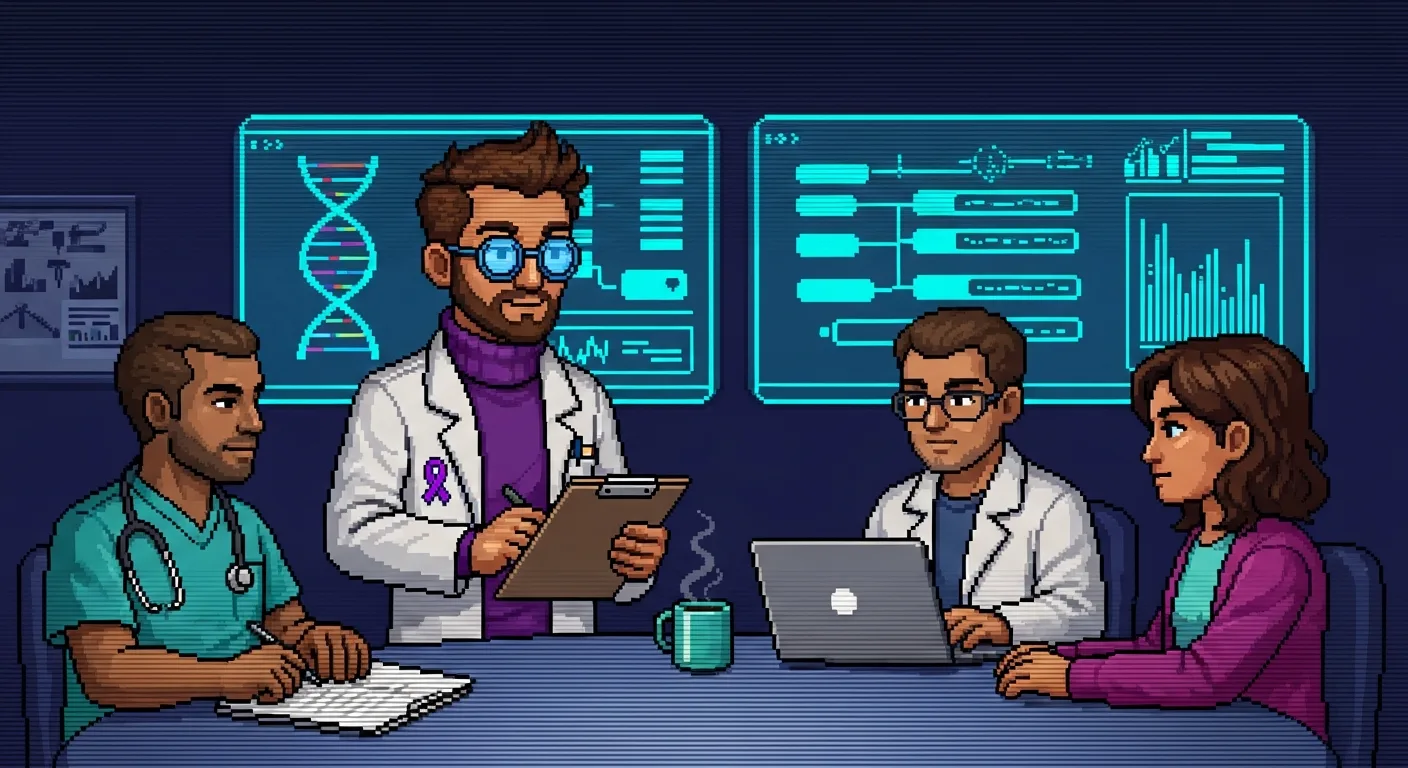
The model is deliberately flat. Gather clinicians, clinical geneticists, bioinformaticians, researchers, and AI specialists from around the world, put them in one room with the individuals and families themselves, and work in real time for 48 hours toward a single goal — a diagnosis. There’s no hierarchy, and the language is chosen with care: it is individuals, not patients, who are at the center, and the families are participants, not subjects. It isn’t about reanalyzing old data; it’s about drawing new samples, running new analyses, and thinking in genuinely new ways.
The events show what that makes possible. In 2023, the Karolinska Institute in Stockholm hosted the first Undiagnosed Hackathon, working to diagnose ten families — a result later written up in Nature Genetics. Radboud University in the Netherlands followed in 2024. In September 2025, Mayo Clinic hosted the third: 122 experts from 28 countries over 48 hours, and the diagnosis bell rang seven times — six answers found in the room, and a seventh in the months after. In Hyderabad in early 2026 — the first time the hackathon was held in Asia — the bell rang again: seven diagnoses by the European registry’s count, eight by the people in the room. Singapore comes next later in the year.
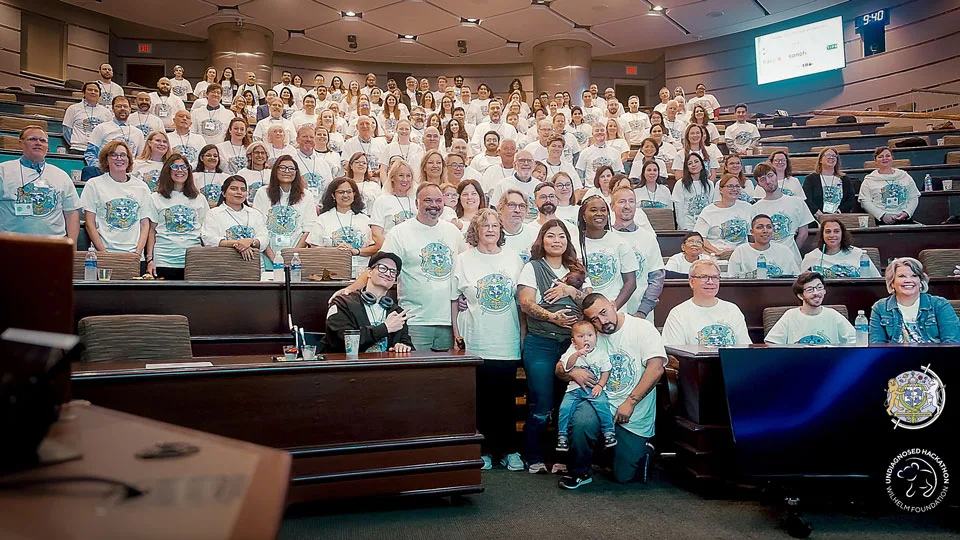
That is what 122 people from 28 countries actually looks like: a room, and everyone in it there for the same weekend.
My part in this is the AI and data side — the machine-learning and infrastructure work that helps human experts pattern-match across a whole genome’s worth of possibilities faster than they could alone. It’s work in the same spirit as the separate Stanford Rare Disease AI Hackathon, where I first saw what patients, clinicians, and engineers can find at one table. I’m one contributor among many. The Undiagnosed Hackathon is Wilhelm’s, and its center of gravity is the families in the room.
A diagnosis is not a cure. But for a family that has spent years being told “we don’t know,” a name is where hope gets its footing. That’s why the work keeps going — and why the door stays open to anyone, clinician or coder or family member, ready to pull up a chair.